
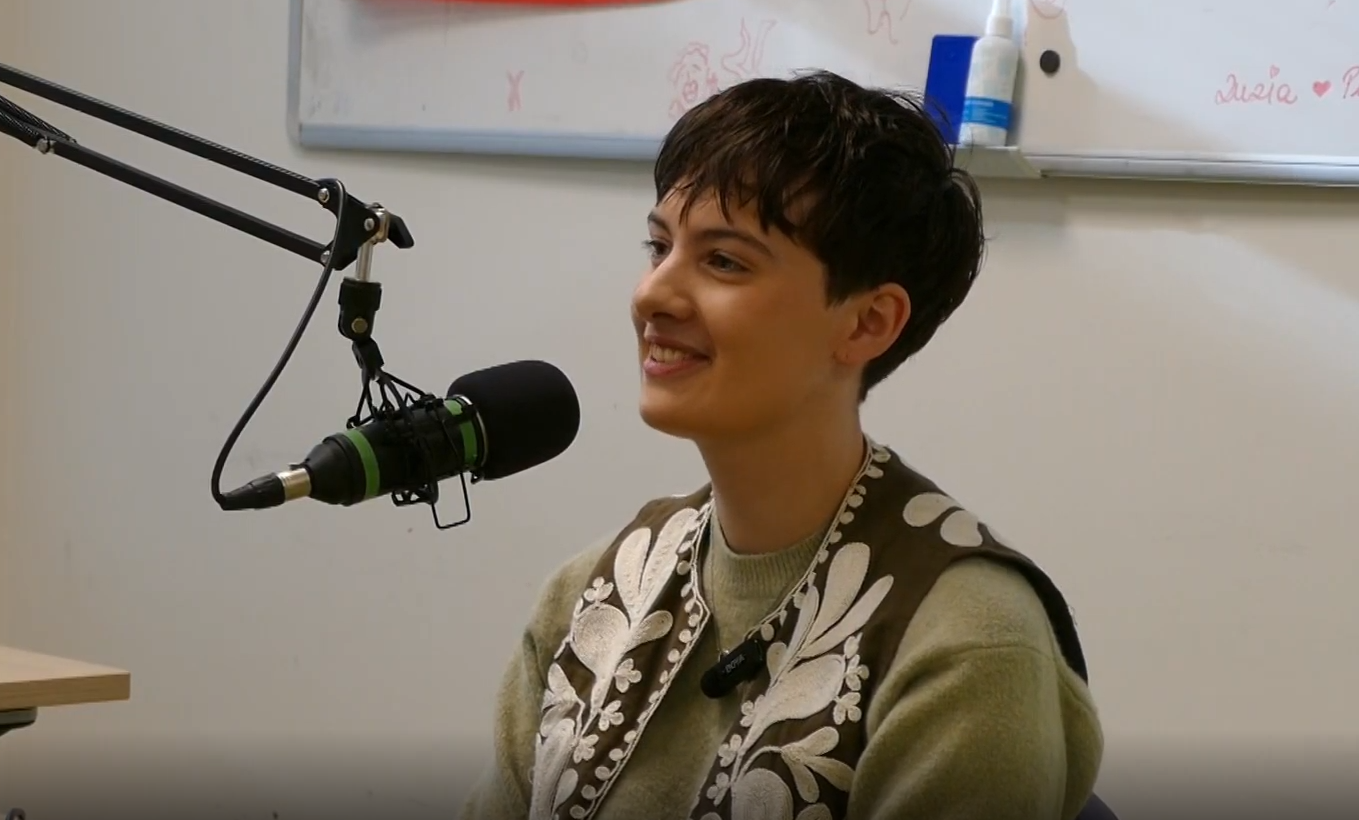
This is the third interview of the Dutch Refresher series. Today we met candidate Julia van Herpen, from D66.
G: Welcome back to the Dutch Refresher, the miniseries where we talk about the upcoming Dutch elections in the Hague. I remind you that this is a collaboration between Baismag and Baiswave and today we are with candidate Julia van Herpen. Would you like to introduce yourself to our listeners and readers?
JH: Hi, I am Julia and I am 23 years old. I am a candidate for D66, number 9 on the list right now. I study political science at Leiden University.
G: That’s really interesting, how did you get into politics? Why did you join the party?
JH: I joined the party as a student, I mean I joined the youth organization when I lived in Nijmegen and that’s when I became active. I think the reason why I did it is because I have always been interested in politics. I remember as a child I would tell my parents that i wanted to change something in the world and I guess that politics sort of became the platform for me to try to do that, so then I became active in the organization and I moved to the Hague. That’s where I got introduced to the “adult” party and I became active here for the municipal elections.
G: So, how long have you been involved in the party?
JH: I guess since I was 20 or something… no, I think it’s longer. For three or four years.
G: It has been a while then.
JH: It has been a while and finally this year i made the decision to be a candidate for the elections so that was a big decision as well.
G: Okay, I have four questions about the party’s programme and then four points that our fellow students raised.
JH: Sure.
G: The first question is about housing which in the programme is called a human right and you guys talk about how you want to build new houses but also how you want to rehabilitate the already existing ones. How are you guys planning to so that? Are you planning to change the legislation or working on then houses themselves?
JH: That is a very important question because we all know housing is a big issue right now becasue there are not enough houses for the people living in the city, especially students have a hard time with it. Although building new houses is a good long term solution, in the end it will take a while and that is why it’s important to create more space in the buildings that are already there. Right now there are very strict regulations concerning shared houses for students, making student rooms out of the houses that have just one person or one family just living in there…in some neighbourhoods there are a lot of those “splitting” houses. But at the moment every neighbourhood has strict rules concerning house sharing. What we want to do is ease those regulations, make it easier for landlords to split the houses into rooms so that students can live in them and make it easier to share your house with your friends as well.
G: Is this going to focus more on certain neighborhoods or is it going to apply everywhere in the city?
JH: We’d like to be flexible in easing the regulations. Right now, there is one rule for everywhere. We want to make sure that it is flexible so that in neighbourhoods where there is spaces for more people to live we can ease these regulations, and in neighbourhoods where pressure is already very high we don’t.
G: On the second point of the party’s programme, “Education and Youth”, you talk about focusing on internationals, supporting them and giving them space. What do you mean by that?
JH: I think a very unique aspect about the Hague is the international student life. There are a lot of international students in the Hague and we think it’s a good thing. We’d like to embrace that and we would like for international students to feel at home in the city, to feel welcomed and supported. We wrote an action plan about international stuents a while ago, where we talked to them and asked “What were the difficult parts about moving to the Netherlands? What are the things you would need more support for?”
A lot of it was about communication. For example considering housing: “What are the rules? When are being taken advantage of?”, but also “How to get a doctor in the Netherlands?”
G: It’s a big issue.
JH: It’s stuff like that, that is hard for international students, sometimes also finding psychological support, like a therapist that speaks English. As a growing student and international growing city, the municipality should try to make international students feel at home here.
G: okay, following this question I wanted to ask you about engagement. You guys have a point in the programme regarding wanting the youth to engage more with politics. So, this question is both about Dutch young people and the internationals. How are you planning to get the youth more involved in politics?
JH: It would be very good if the youth, but also people in general would be more involved in municipal politics. But regarding specifically young people, we talked about a possible youth council to give them a more structural place in policy making. This is just one example, but this whole campaign is about making sure that young people go out and vote, that they make their voices heard in local politics. I think that’s very important. And for us international students are an extra dimension in the Hague to think about. In our action plan international students told us how they would like the municipality to talk with them and not just about them. A lot of policy about internationals is being made about those students…
G: But without hearing them
JH: Well, the municipality obviously tries, it’s not like they are not doing anything, but it could be more. We would like to invest in that.
G: Yeah, this is my personal experience, but I feel like a lot of internationals don’t even know that they can engage in politics here.
JH: Right! A lot don’t even know that they can vote. That is the thing about the municipal elections, you CAN vote if you are an EU student or if you have lived here for five years or longer.
G: And of course, being registered in the Hague for this specific election. But it was a surprise for a lot of our friends as well, they didn’t know they could vote.
JH: And you guys live here as well. The rules and policies that are being made affect your lives as well.
G: The last question is about street safety.
JH: That is a big issue in these elections.
G: Yes, actually I talked to a lot of parties about this, and everyone has different opinions on hoe to address this. You guys mention the BOAs, the municipal investigation officers. And you also talk about having a conversation with the people that re more targeted in the streets, such as women and children. Which measures would you adopt to make them feel more safe?
JH: It is a complex issue that has a lot of aspects to it, but I think there are two very concrete things that we can do. We want to expand the BOAs capacity, expecially in the night. We want to make sure that they are also on the streets during the times where young people are on the streets, going out. But this is, of course, a more repressive measure. If something happens, they can intervene and help, which is great. Something else that we want to do is design the streets in a way that makes them safe, so that we have clean and lively streets to be in. That means talking to people that usually feel unsafe in the streets, which are for example women. For example, HS (Station Holland Spoor) is a place where people feel very unsafe. If we talk to women about, we can ask them how they would feel safer, what needs to be changed about the environment. That is sort of the way we look at it.
G: So, it is about both resolving the issue but also preventing it.
JH: Yeah, and if you ask me personally, I think prevention is very important.
G: That is nice. Okay I have the four points; I’m going to tell you what they are and then you can decide in which order to answer. It’s recycling, affordability (both regarding housing and the living cost of the city), third space and Dutch learning courses.
JH: Alright. I will start with third spaces because that is the one that I find the most interesting. They are the most valuable for students since they live in very small housing situations and especially for those people it is very important to be able to have places where they can go and spend time without having to spend a lot of money while doing so. That is something we want to encourage and support. For example encouraging student and sport organizations and actively supporting them is a big part of our plan. So we can make sure that students have a place where they can spend time and be with each other. Supporting a more diverse nightlife is part of it as well so that there is something there for everyone. I know especially that international students have spoken about how they would like a more diverse nightlife in the Hague. I have heard this before and I can imagine what you mean by that. Those are definitely things we want to invest in. In general, I think that just the way the city feels is a big part of it as well. If the outside space is nice, that can also be a third space. We want to invest a lot of money in the outside space and in the greenery to make sure, for example, that there is enough shade and trees and nice spaces to be outside. There are a lot of options on what third spaces could be.
G: Yes, you guys talk about also investing in libraries.
JH: Yes and also study spaces. Libraries can play even a bigger role in providing third spaces.
G: What about recycling? Because I feel liek there are not many parties focusing on it.
JH: I would say it’s not a big issue in these municipal elections, but D66 finds climate and sustainability very important. Recycling is obviously a part of that so that is definitely something we would encourage. Something that we do talk about in these elections is how we as a city we can be more responsible in the waste we create and what we want to do with that is working together with second hand shops to get rid of the big waste, to make sure that we are not disposing of valuable materials that could be kept.
G: that is actually a great idea. What about affordability? Both regarding housing and the living cost of this city.
JH: Housing is something I thought about immediately because a very big part of your income is just spent on housing. I think a student room is on average 700 euros per month which is a huge amount of money. Solving the housing crisis is a big part of working on affordability on the long term. If we build more houses, then the prices will hopefully also go down. Or at least you won’t have to settle for a very expensive room anymore because there are more options for you. And this is of course about building more houses and creating more in the existing environment. Although I think there is much more on affordability. D66 is a party where we believe that everyone is free to live their own life and to make their own choices, but we also find very important to not leave anyone behind in doing so because if only a few people are free in doing so then none of us are. Affordability is part of this principle. For example, we want to change the Ooievaarspass, which is a card for low-income people in the Hague that they can use to get certain services. We want to change it to a situation where there is just one amount of credit on it, that people can decide to spend how they want. We believe that people know best for themselves.
G: So they should have the freedom of using it how they want.
JH: Absolutely. That is one specific measure so that people can afford life in the Hague because it is a very expensive city.
G: It definitely is.
JH: Expecially for students it can be very challenging.
G: Sometimes it really is. The last point is about Dutch learning courses. A lot of us feel like we would like to learn the language to integrate better and participate more, but sometimes these courses are very expensive. Students were asking if more courses will be provided, even in public spaces, such as in the library.
JH: I know there are language cafes in the Hague, so that is one initiative. I have heard this point before in the last weeks. Honestly as a Dutch person this is not something that I was immediately aware of so i looked into it a little bit. Regarding international students we find it very important that you feel supported and at home. I don’t know what the university or the municipality already offer.
G: For the municipality, i am not sure either. I have been told the International centre might have some course, while at our university we have a course, but i think it’s 100 euros for ten lessons. It’s not that affordable. I think we would all love to have more option.
JH: Yes, learning the language is very importnat. I studied in Vienna last year for a semester and I took a German class. It made the experience so much better because I was able to connect with more people and understand the city that I was in so I totally see the value in that. About immigrants and internationals in general we do talk about that in our programme as well, we want to invest in opportunities for them, to learn Dutch and start participating in the city. I guess that is more from an immigrant perspective so i don’t know how that would apply to international students specifically, but it is definitely something we find important.
G: Okay Julia, thank you very much for coming! Do you maybe have anything else that you want to tell our listeners and readers before we go?
JH: Sure. I would say the most important thing is that you go vote, especially since students and internationals usually don’t go vote, and your voices are very important in these elections. So go vote and if you have any questions, reach out to me on Instagram, I am happy to help. Good luck!
 BAISmag