
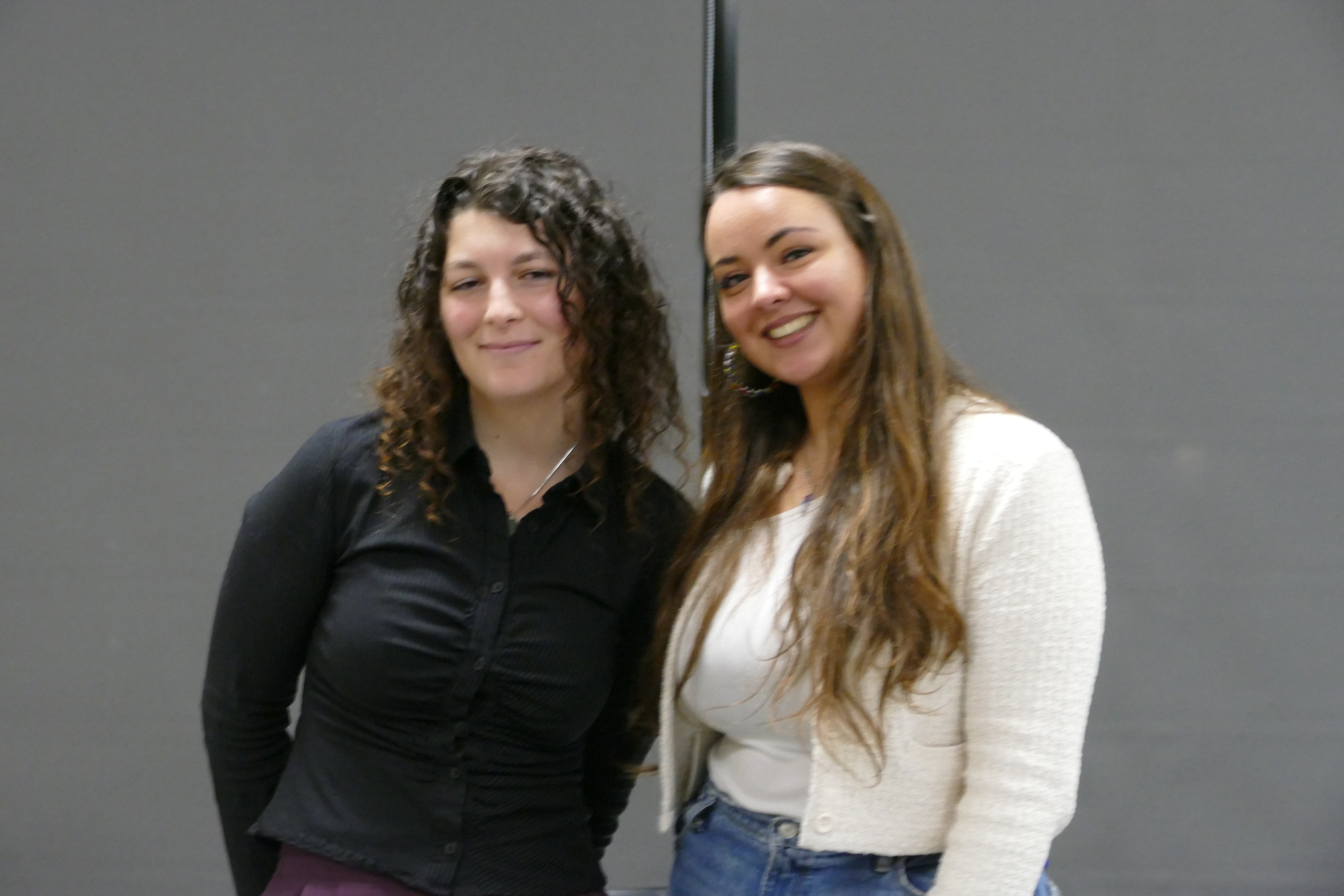
On the 3rd of February Baismag had the chance to interview Fenna Timsi, candidate number 13 on the PVDA list for the upcoming municipal election.
R: Today I am here with Fenna Timsi candidate for the municipality elections that are going to happen on the 18th of March of this year. Also, this is a special collaboration between Baismag and Baiswave, our magazine and radio of the Bachelor of International Studies. So, Fenna, could you introduce yourself to our readers and listeners that don’t know you yet?
FT: Yes, of course. Thank you so much for the invitation, I really appreciate it. My name is Fenna Timsi, I am candidate number 13 on the list for the Groen-Links PVDA for the city council of the Hague.
My journey started growing up here. I grew up in DH in the Stationbuurt, there is a lot of students living there so maybe you know it. Also, a lot of places to visit. What I always saw as a kid… the neighbourhood where I grew up was very diverse, I saw a lot of people from different parts of the world, different background. But I also saw a lot of differences that struck me a lot. For example, people without a house on the streets, on my way to school I could see a lot of differences on how different neighbourhoods were treated. This was the moment for me that I decided I wanted to do something about it, I want to make sure that my city is a place that is equal, that my city has place for everybody where we take care of each other. So that is kind of how my journey started. And then I decided to study physics, which is a bit different from what I am doing now. Currently I am doing a master’s in international relations. Also, the last two and half years I was a UN Youth representative in human rights and security and that meant translating all the visions, opinions, worries of people in international politics. And now I am running for city council because I felt that the moments that felt more meaningful were those with young people, in childcare, in education facilities and I wanted to make a difference for them.
R: How did the switch from physics to international relations happen?
FT: That is a good question because it can seem very random, but sometimes I see some similarities when thinking of atoms. Sometimes it is a little harder bringing them closer together energetically or just to smash them against each other, I feel that this is a bit politics as well *laughs*
But I actually ended up here because I did a campaign on gender-based violence, something that I saw, and that you probably recognize around you. A report came out by Amnesty International that 1 out of 9 female students was raped at the time, when I was studying physics and this shocked me a lot because I saw those stories all around me. We all know a story, may not be ourselves, and I was so shocked by how structural this was. I remember posting something like “this is really bad, we need to do something, we need to organize” and I started working with Amnesty International. We saw a lot of young people saying that we should definitely do something about this. What happened was that we did a campaign with Amnesty, changing the rape legislation in the Netherlands. So, we wanted to make it consent based and the law passed! We could see so much difference in our community ourselves as well. This was already a moment where I thought “Wow we can actually change things”.
R: That’s a nice achievement, especially without previous experience
FT: Yes, and I think we all have lived experience. There is so much we bring to the table as young people. In this campaign we didn’t have any money, but we needed to organize ourselves creatively. For me that showed that a lot of things that you think they are set in stone, like laws, you can change them with young people. And that is why part of my mission is to make sure that young people have the opportunity to do so, that are given the right to do so, that they have the full freedom to do so. We listen to them because all these things that we think are set in stone are going to have to chang eventually and it’s going to be us that do it.
R: This is very important. One of the questions that I had for you was about one of the points of your programme, specifically, the one about women safety in The Hague and it was mostly related to your experience as a UN Youth ambassador. You advocated, as you also just said, a lot against women violence. What do you think it could be changed in The Hague to make the streets more safe for women and for everyone in general?
FT: I love this question. We also recently had an action that we did together with the Jonge Socialisten and DWARS (those are the youth wings of the party PVDA) and it was a light action. I will explain what that is. So recently we saw an assault on a woman on the streets at Stationweg and said, “This can’t really happen in our city, we really need to reshape how we are behaving with each other, we need to treat women well”. So, what we did was that we wanted to illuminate the city, especially in the dark where you see a lot of incidents happening. We were a lot of people, and we all took our lights to light up the city, we wanted to create a warm city that feels good for everybody. There (at the event) we asked people what do they wanted for our city to feel safe and we also asked men what they were going to do, because let’s be honest we also have to make a cultural shift. We also need men to-
R: participate
FT: Yeah and to act normally *laughs*. A few things came out, that we advocate for a lot and that I really want to change when I am in the city council. First of all is to have a very strong and integrated approach on street intimidation, but also on domestic violence, because that is also part of the problem. To make sure that we have a very good approach against femicide. And something that we really want to see happening is that they city is designed from the perspective of a woman. What you see now is that the city is still male centered, the perspective of the woman is not really taken into consideration. For example, a woman could say “oh I am walking here alone, is there nearby a café, so a place where there is a group of people?” or “how is the light regulated? Is it a lot of light all at once so I feel threatened or is there no light which is also not good for the sense of safety. Also, we want to make sure that all the decisions that we take are beneficial for the safety of women. We all know the stories of walking with our keys in our hand trying to protect ourselves. Some people told us that they tried to look like a man in the night because otherwise they are scared and this cannot happen anymore. This is something that we want to implement in order for the city to be safer for everybody.
R: Yes, especially since examples like the key experience is shared among every woman, not just in the Netherlands but everywhere.
FT: Yes, and it’s political will. A lot of times I hear “this is a problem that we will resolve in many years” No, we have to do it now!
R: Right now. I have one last question for you and then I have 4 points that some fellow students brought up to me about some changes that they would like for the city. The last question is specifically about one of the main points of focus in your campaign which is focusing on the area of Zuid-west. When you talk about focusing on that area, are you talking about the affordability, the safety, the services… what are we talking about specifically?
FT: I just came from Zuid-west, I took my bike and biked very fast to come here *laughs*
But there is a lot of things that we see there. On one hand we see the amazing people that are working everyday for their part of the city. There are a lot of people who have a lot of initiatives to support each other. You have a lot of language learning, you see a lot of cultures blooming. Things for the youth to do… On the other hand what we also see is that this is also an area we have to invest way more in. What I said for example as well about Stationbuurt. It has changed quite a lot, but when I grew up there it was an area that needed a lot of investment, improvement and political will in order to make the city more equal. There are a few things, for example the housing. It is of course not only in Zuidwest, but one thing that is very important is to make sure that our houses are affordable. You know, we are all students so we know the struggle. But also, to make sure that you can live where you want in an area that has diversity or what kind of housing you want, to make sure the rent is way lower because I have spoken to people, but you might also know these stories. They are literally couch surfing for a year, maybe even more. These are young people like students, but also families, families that are ending up on the streets and this cannot happen. I think this is something that is very very important. One of the other things in the area is safety. I live in Laakwartier now and one of the things that it is important is mobility. How fast can you be somewhere? I mean I can bike quite fast, but public transport should be very accessible. This has huge impact on the opportunity of people. I teach at a high school in Schilderswijk, it’s lovely! I have students that also tell me, “Miss it’s very expensive to come here for a few hours”. This cannot happen; it needs to be affordable.
R: It needs to be accessible.
FT: Exactly! And it’s the same for the students! If you are a student, I don’t think you should be worried all the time and go to sleep with stress in your body about where you are going to live. Or you shouldn’t have three jobs next to your studies. A lot of students I talk to say that they don’t go to class because they have to work. I don’t know if you also do that…
R: it’s a felt experience
FT: Yeah. I think life for student and young people should be also about exploring and a city should invite to do that; it should be built around that. That starts with affordability, with safety and also, of course, with sustainability. We need a future. A lot of young people have been telling me that we have to put this future perspective in the decisions that we make. In an area such as Zuidwest these things all come together. As a politician, it’s your job to make sure that the resources end up where they should be invested, because if you don’t, they are going to flow into richer neighbourhoods. I think that is the task that we have today.
R: I have now four points proposed by other students. I’m going to tell you the points and then you can tell me what you would do.
FT: Yes, of course.
R: So, the points are affordability, as we mentioned before, which is a common issue, not just among students, but all the residents of the Hague. Sustainability, which is a point that was raised mostly by students who come from countries where recycling, especially in households is a big deal. Personally, I also feel like people in the Netherlands don’t really recycle. Some parts of the Hague do, but it’s not as common as in other countries. Then, some students are asking about more language courses to learn Dutch, because this is also part of integration. I think that if you don’t learn the language of a country, you will never truly integrate, but if the cost of the language classes is really high it’s going to be harder for students to learn the language and integrate in the place where they are living.
The last request was third spaces, which are very important for cities. So, we are talking about spaces were, not just students, but young people and more aged people can reunite without having to spend a lot of money or without having to book the place in advance.
FT: I definitely agree. Let me start with language, because I just came from a session at a vocational institution, Mondriaan, where we were talking about languages, and also I teach it. So, it’s something very dear to my heart. I also come a family with a lot of languages spoken within us, so I also know how hard it is sometimes to not be understood.
We talked about it a little bit before (before the interview), but I also studied in Portugal as an exchange student and there I learned Portuguese because I was studying fully in Portuguese. For language training one of the things that is very important is that it should be affordable. There are places where you can get language courses and they are extremely expensive. How are you going to do this as a student? This is outrageous. Sometimes you can’t pay for it, so what are you going to do? You are going to look for alternatives. This is something a city council should invest in, to make this accessible, affordable, so you know where to go. The responsibility is within education facilities, but the city of the Hague should of course support it. Also, something that I find really important is that you have a sense of where to go to in bureaucracy. Going to a new country is extremely difficult, for students, for other newcomers. It’s something we talked about in the session I just came from. You need a bit of support, you need a municipality that stands next to you, that helps understanding the system, that guides you.
My family is mixed, Algerian and Dutch. From my Algerian side i learned a lot about welcoming guests. You know we also have the Dutch hospitality that also has its charms *laughs* it is about always giving a hand to people who are trying to learn something, and these language learning groups are something to really invest in. Also, because you see how much it helps for people to integrate into the work force. A lot of people can’t find a job because they’re told their Dutch is not good enough, but at the same time we are always saying “oh we don’t have enough people to fill this job position”. I see a lot of opportunity for the municipality to step in and give a hand, help with the language and integration in the workforce.
Then you mentioned third spaces. I go to a lot of neighbourhoods third spaces, and I find that if you want to know what is going on in the city, you need to go there because there are people from all stages of life coming together.
Let’s be honest, there have been a lot of cuts on culture, and this should not be happening. After Covid we lost a lot of contact with each other, and I think it’s important that we invest in this. The city of the Hague should be the safest for all women, but it should be also a place that embraces culture, art. A city where you can go out and have fun. And for this, of course, you need third spaces. For dialogue and understanding each other as well. Basically, the UN, where I worked, is a whole third space. So many different cultures talking to each other… I worked on a lot of issues, ranging from gender-based violence to peace and security. But if you don’t have these dialogues, you cannot solve these issues. On an international level we call ourselves the city of peace and justice, but these ideas should be translated into the lives of people. Third spaces are something that they should be definitely invested in, there should be money put into. And it should be done in a sustainable way because sometimes these spaces are constantly juggling with funds. You (the municipality) need to be a trustable partner, in this sense. You have to stand next to the people. That’s what we hear from the people in the campaign.
About affordability, I think it’s something very crosscutting. We see a lot that many students and young people are working really hard and sweating, breaking their back almost. Sometimes even supporting their families and the Hague and the Netherlands are not cheap.
R: Definitely not.
FT: No, right? So, what are you going to do if you can barely pay your rent and you have a thousand things to worry about? Your studies, you trying to discover who you are, what you think is important, trying to be a good person in the society…but then you have all these barriers. This is important in terms of housing but also in terms of transport. It should be cheap and easily accessible. And then you had a fourth point?
R: It was sustainability in the sense of recycling.
FT: Oh yeah! This is very interesting. Recycling this is something we always want to do right, but the system is confusing, from city to city. In some cities you don’t even know if trash is actually going to be recycled. Here you see more people recycling, but they also don’t always know where it will end up, that’s what I hear a lot. I think this is something we should make easy for people. Make it accessible, easy. To make sure that people know what to do, they put the trash somewhere and they know it gets taken care of.
This in terms of recycling, and in terms of other forms of sustainability that we hear from people is that there is a lot of poverty around energy. We know that the energy cost can be super high. Sometimes… also if you have housemates that don’t really *laughs* no, just kidding, not my housemates, they are really good.
R: But they can influence your cost.
FT: Yeah, in shared household is hard to keep track of what works and what doesn’t. What I really love is energy coaches. They guide you through how you can manage your usage better, but also, they help you in situation where, for example, someone want to isolate your home. They help you navigating through this system. We call it energy poverty, but at the end it’s an affordability issue. We shouldn’t let people, literally, sit in the cold. This is an issue we should invest in as well to make sure that people know where to go, because there are initiatives and organizations that are working to make their neighbourhood more sustainable. They should be given a platform, made more accessible. I hope that answers your questions.
R: It was an extensive answer. Thank you for joining us! Do you have one last comment that you would like to leave for our readers and listeners?
FT: In terms of what can you do and who can vote in these elections, if you have a European passport or if you have lived here for five years legally you can vote. It’s important to. It’s a difficult time for many of us. We talked about the things that we think sometimes are set in stone, but at the end I do see the power of youth joining together and standing in solidarity with each other. And this is exactly the kind of energy that I want to bring into the city council for the future that we all want. So please make sure to vote and if there is anything happening in the city you can contact me! I’ll definitely help you. Thank you so much.
Reach out to Fenna
Instagram: fenna_timsi
 BAISmag